The Center has already blacklisted the majority of Hurriyat’s important members, but there are still a few separatist groups that have split from the almost nonexistent conglomerate that are only present on paper.
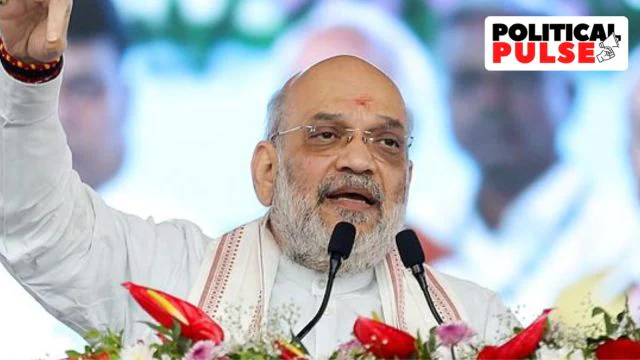
During his ongoing three-day visit to Jammu and Kashmir (J&K), Union Home Minister Amit Shah announced on Tuesday that three additional organizations have severed ties with the separatist coalition Hurriyat Conference. In an X post, Shah stated, “The Jammu Kashmir Islamic Political Party, Jammu and Kashmir Muslim Democratic League, and Kashmir Freedom Front have disassociated themselves from the Hurriyat, showcasing the growing trust in India’s Constitution among the valley’s residents.” He further noted that this development strengthens Prime Minister Narendra Modi’s vision of a united and robust India, with 11 organizations now rejecting separatism in favor of the Constitution.
Over the past three days, these lesser-known separatist groups issued nearly identical statements, asserting they have no affiliation with any Hurriyat factions or its ideology and pledging allegiance to the Indian Constitution. The Muslim Democratic League, led by Hakim Abdul Rashid, was previously aligned with the hardline Hurriyat faction once headed by the late Syed Ali Shah Geelani. Despite its minimal influence, Rashid served as the Hurriyat’s spokesperson—appointed by Geelani—when its leadership was imprisoned ahead of the 2019 revocation of Article 370, which had granted J&K special status. The other two groups, the Islamic Political Party and Kashmir Freedom Front, are led by Mohammad Yousuf Naqash and Bashir Ahmad Andrabi, respectively.
These announcements follow a pattern of similar declarations by various separatist entities distancing themselves from the Hurriyat in recent weeks. While the central government has already banned most of the Hurriyat’s major components, many of these newly dissociated groups have little tangible presence. Their synchronized statements coincide with a renewed J&K Police operation targeting separatists, described as an effort to “dismantle the remnants” of the separatist framework in the Valley. Under the Union Territory’s administrative structure, the J&K Police operates under the Lieutenant Governor’s authority.
In recent days, police have raided the residences of separatist figures across the Valley and reopened investigations into past cases. Many of these leaders have been incarcerated—some since August 2019—leaving the Hurriyat effectively inactive over the past six years, with no political statements issued during this period.
The hardline Hurriyat faction, now led by Masarat Alam following Geelani’s death, has seen nearly all its top- and mid-level leaders jailed. Meanwhile, the moderate faction, headed by Mirwaiz Umar Farooq—who has consistently favored dialogue to address the Kashmir issue—has faced significant setbacks. Recently, the Centre banned two of its largest groups: Mirwaiz’s Awami Action Committee (AAC) and Masroor Abbas Ansari’s Ittehad-ul-Muslimeen. Though Mirwaiz’s four-year house detention ended in 2023, his movements remain restricted, and he is frequently barred from delivering Friday sermons at Srinagar’s Jamia Masjid. Other key figures in his faction, such as Bilal Lone of the People’s Conference and Professor Abdul Gani Bhat of the J-K Muslim Conference, have long withdrawn from politics and, unlike others, avoided arrest or detention. With many of its once-active constituents now dormant, Mirwaiz stands as the moderate faction’s lone prominent voice.