Unlike West Bengal, Kerala has taken a while to realize this. Many PSUs that were losing money have been turned around in Kerala, however others cannot be recovered. We are attempting private engagement for them,” the interim coordinator for CPI(M) states.
Prakash Karat on CPI(M)’s Challenges, INDIA Bloc, and Future Strategy
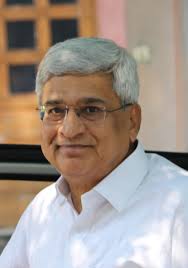
Ahead of the Communist Party of India (Marxist)’s 24th party congress in Madurai, Tamil Nadu, from April 2 to 6, interim leader Prakash Karat discussed the party’s recent performance, its evolving stance on key issues, and strategies for reviving its electoral influence. In an interview with The Indian Express, he also shared insights on the INDIA bloc and CPI(M)’s approach to political mobilization.
Strengthening CPI(M)’s Political Base
Acknowledging the party’s stagnant electoral strength, Karat stated that a key focus of the congress would be expanding CPI(M)’s independent political influence. He admitted that while the party has engaged in struggles and movements, it has not been successful in converting this activism into sustained political support.
“We have identified reasons for this, including socio-economic changes in rural areas and shifts in class structures. We need to better understand these changes and work accordingly,” Karat said.
Challenges in Mobilization
Responding to questions on CPI(M)’s traditional approach, Karat emphasized the importance of going beyond just organizing movements. He noted that right-wing forces, particularly the RSS, have expanded their presence in cultural and social spheres, while the CPI(M) has struggled to counter this effectively.
“We need to reach out to religious believers and make them understand that we are not against their faith, but against those misusing religion for political gains. While our previous party congress gave the right directions on this, we have failed in implementation,” he admitted.
CPI(M) and Religious Beliefs
Karat also addressed the perception that CPI(M.) members must be atheists, clarifying that the party does not mandate atheism.
“A significant number of CPI(M) members are believers. If they work among the people and take up their issues, they will be respected regardless of their party’s secular stance,” he said.
The Future of the INDIA Bloc
Commenting on the INDIA opposition alliance, Karat noted that no meetings had taken place since the Lok Sabha elections nine months ago.
“The alliance was formed to counter the BJP in the elections, and it had partial success in preventing them from securing a majority. But beyond elections, there has been no clarity on the way forward,” he explained.
He also ruled out the possibility of a state-level replication of the INDIA bloc, citing conflicts among various opposition parties in different states. He pointed to the Congress and AAP’s rivalry in Delhi, CPI(M) and TMC’s clashes in West Bengal, and CPI(M)-Congress competition in Kerala as examples of why a broader national strategy is needed.
On who should take the lead in reviving the bloc, Karat said, “The Congress, being the largest opposition party, should take the initiative. If they call a meeting, I am sure all parties will participate.”
CPI(M) and Congress: No Formal Alliance
While CPI(M) has collaborated with the Congress to consolidate anti-BJP votes, Karat clarified that there is no formal alliance.
“For us, an alliance is not just about seat-sharing but requires a programmatic basis. We have major differences with the Congress on economic policies and other issues,” he stated.
CPI(M)’s Stand on Fascism
Karat also explained why the party recently issued a clarification on its use of the term “neo-fascist.”
“This is the first time we have used the term in our political documents. The explanatory note clarifies that neo-fascist forces are emerging not just in India but globally. We have never called the government or state fascist, but we do see increasing fascistic trends,” he explained.
Private Universities in Kerala
On the CPI(M)-led Kerala government’s decision to allow private universities, Karat defended the move, stating that while the party remains opposed to privatization, it is now responding to the reality of growing private education.
“A large number of students from Kerala are going to private universities in Tamil Nadu and Karnataka. By allowing private universities within Kerala, we hope to retain students while ensuring a degree of regulation, such as mandating 40% intake from Kerala and reservations for SC/ST students,” he said.
Public Sector Enterprises and Private Participation
Karat also addressed concerns about private participation in Kerala’s loss-making public sector undertakings (PSUs), clarifying that the approach is limited.
“Unlike in West Bengal, where we realized the need for this earlier, Kerala has tried to turn around many PSUs. However, some enterprises are irretrievable, and keeping them running is a financial burden. For such cases, we are seeking private participation while maintaining public control,” he explained.
Kerala CM’s Third Term and Party Leadership Changes
When asked if Pinarayi Vijayan would continue as Chief Minister if CPI(M) wins a third term in Kerala, Karat said, “Nothing is decided yet, but our focus is on securing another term. The Nava Kerala vision document reflects our long-term development goals.”
On Vijayan’s exemption from the party’s 75-year age cap, Karat clarified that the rule applies in Kerala as well, but the Chief Minister’s position requires an exception.
Discussing leadership transitions at the national level, he acknowledged that senior leaders, including himself, Brinda Karat, and Subhashini Ali, may step down from key party bodies. However, he dismissed concerns about a leadership vacuum, stating, “We have a strong pool of experienced leaders who can take over.”
On his own role after stepping down, Karat said, “We may leave official positions, but we will continue to work for the party in other capacities.”
CPI(M)’s Leadership Diversity
Addressing concerns about the lack of women, Dalit, and OBC leaders at the party’s highest levels, Karat maintained that leadership selection is based on merit.
“We have a diverse pool of leaders, and we will choose the most capable individuals,” he concluded.